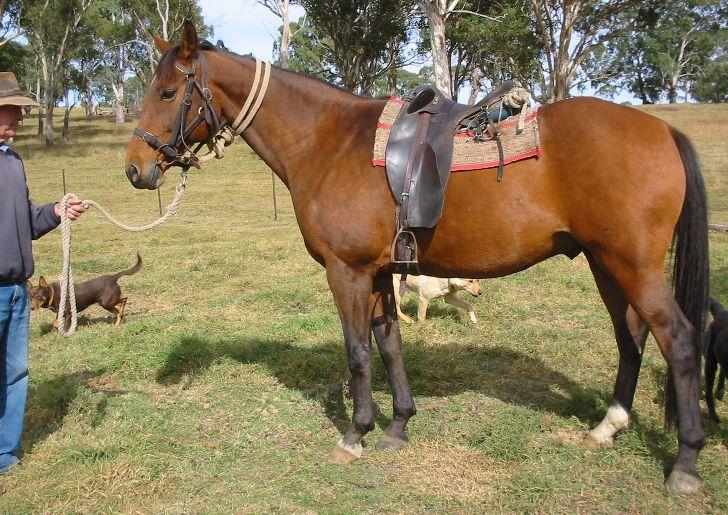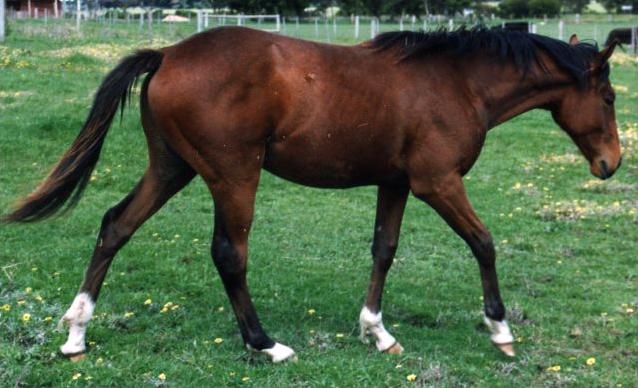
Riders do not telephone a practitioner saying “thoracolumbar restriction.” They say the horse is snatching at the bit, will not stand for the farrier on the near hind, has started to cow-kick at the girth, or will not pick up a lead it picked up all last season. Those sentences are the beginning of a file. They are not the name of a joint.
A biomechanical assessment, in the sense this journal uses it, is a trained look at how the horse’s spine and pelvis are moving — after a veterinarian has decided the horse is safe to treat and that the problem is not a fracture, a foot abscess, or a neurological disease. The equine chiropractic hub is the desk. What equine chiropractic is is the definition.
The signs owners actually bring
A shorter stride behind, especially if it appeared with a change of work. A reluctance to step under on one hind. A horse that holds its tail to one side, or that swishes when the lumbar region is groomed. A saddle that has started to slip, or a numnah that is dry in a new place. A cold back that lasts longer than the first circle; cold-backed horses explained is the longer account of that phrase.
Under saddle the list lengthens. The horse hollows when you ask for a rounder outline. The canter becomes four-beat on one rein. The horse refuses a fence it has jumped, or rushes, or starts to look at the same corner of the arena. In a stock saddle, the horse that used to track a cow all day now loses the hind end on the turn. On a racetrack, the work rider says the horse “doesn’t let go” down the shoulder.
In the yard: difficulty picking up a hind foot, a new grumpiness at the wither, a head that will not flex to one side for the dentist, a poll that flinches when the bridle goes on. None of these is specific. Together they say the moving parts have changed.
Signs that are not a booking
Ataxia — a horse that looks drunk, that knuckles, that cannot place the hind feet — is a veterinary emergency, not a sacroiliac story. A horse that is down and cannot rise is an emergency. A horse that is suddenly blind in one eye, or that has a head tilt and a drooping lip, is an emergency. A non-weight-bearing limb is an emergency until a foot abscess or a fracture has been sorted.
After a fall or slip, vet first is the trauma version of this paragraph. Colic, a wound, a fever and a blowing horse do not belong on this page at all.
Wobblers, EPM-type presentations (less common as a local diagnosis than as an import conversation), and cervical stenosis are why “he is just stiff in the neck” is a sentence that has to earn a veterinary examination. Manual therapy on an ataxic horse is how people make a bad day worse.
Compensation, again
A sore foot will make a horse look tight through the shoulder and the opposite loin. A hock that should have been flexed and radiographed will produce a pelvis that a well-meaning pair of hands wants to “put in.” A sharp tooth will produce a poll that feels like a chiropractic goldmine. Limping, stiffness and compensation patterns is written for both species because the logic is the same.
This is why a biomechanical assessment that never asks about the farrier’s last visit, the saddle, or the last lameness work-up is incomplete. Performance horses, saddle fit and the spine and farriers, saddlers and animal chiropractors are the adjacent essays.
How a veterinarian and a practitioner split the same signs
A good equine veterinarian in the Hunter, the Adelaide Hills or the Illawarra will watch the horse walk and trot, look at the feet, flex the limbs, and decide whether they want blocks, films or a rest trial. They may then say: I cannot find a primary lameness, the back is uncomfortable, I am comfortable with a qualified musculoskeletal look. That is the cleanest referral sentence in the field.
A trained animal chiropractor — ABPA full membership, the RMIT or Box Hill postgraduate pathway — will watch the same horse and talk about segmental movement and muscle guarding. They should write back. They should not rename a grade 3 lame horse as a “pelvic lock.”
The Chiropractic Board of Australia does not regulate the animal. The state veterinary practice act does. Diagnosis stays with the veterinarian.
Working and paddock horses, not only the warmblood
A stock horse in a campdraft at Warwick and a pony in a back paddock at Callala will both tell you they are sore. The pony’s owner is less likely to have a regular saddler and more likely to have an old numnah and a Facebook recommendation. The signs are still the signs. The qualification test is still how to find a qualified animal chiropractor.
Paddocked horses that are only ridden on weekends produce a particular pattern: stiff on Saturday morning, better by Sunday afternoon, worse again the next Saturday. That can be fitness. It can be a back. It can be feet that are a week overdue. Do not let the weekend calendar decide the diagnosis.
When should I book, and when should I wait?
Book the veterinarian when the change has lasted more than a ride or two, when the horse is unhappy to be girthed, when a lead has vanished, or when the saddle has started to slip. Book a biomechanical assessment when that veterinarian is comfortable with it, and when you can give the practitioner a history that includes feet, teeth and saddle.
Wait — meaning, go to a clinic now — if the horse is neurologically wrong, down, or non-weight-bearing. Do not wait through a season of “he will be right” if a working horse has lost the ability to do the job.
How much the second visit costs is the usual mobile range: owners often report $130 to $280 plus travel in 2025. The first visit, the veterinary one, is not optional overhead. It is the reason the second visit is allowed to happen.